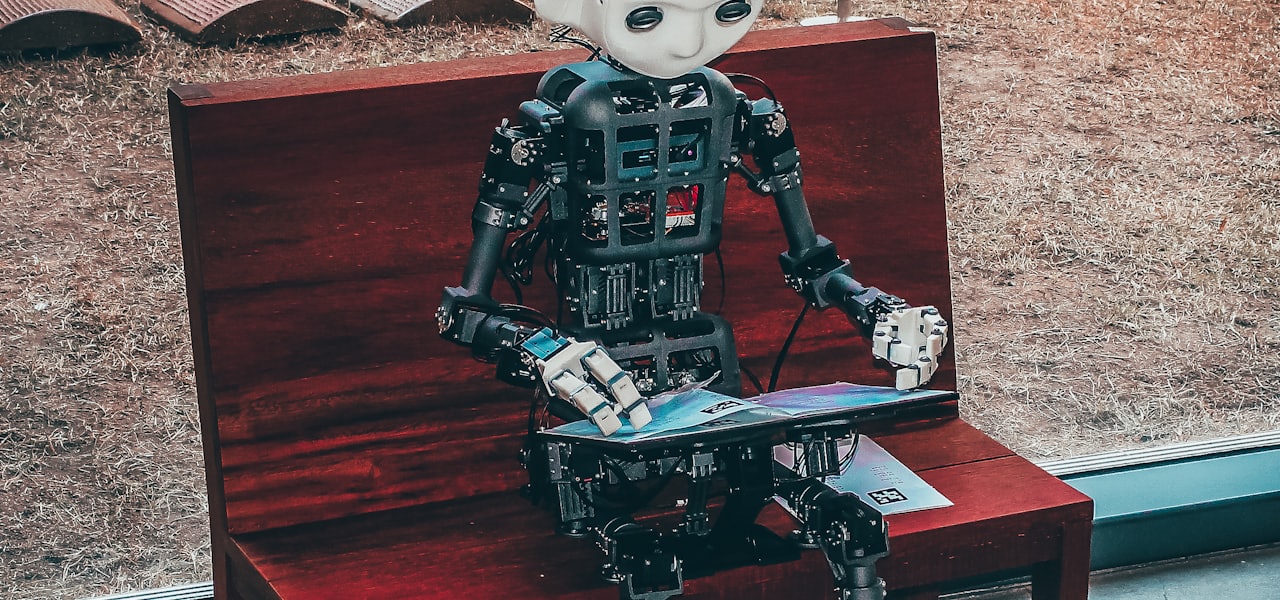
Trying to pick the best AI voice assistant? An AI voice assistant is software that uses machine learning to help you get more done — it scales effortlessly from a single task to thousands. The best picks balance beginner-friendly simplicity with the depth power users need, and they ship updates often. Whether you are a beginner or a pro, the right AI voice assistant slots into your workflow and pays for itself fast. This guide breaks down the top picks, their pros and cons, and who each one is best for.
Microsoft Whiteboard
Microsoft Whiteboard is a free multi-platform application, as well as an online service and a feature in Microsoft Teams, which simulates a virtual whiteboard and enables real-time collaboration between users. == Overview and features == Microsoft Whiteboard allows users to draw on a virtual whiteboard using input methods such as a stylus pen or a mouse and keyboard, and write down notes, draw connections between shareable ideas, and interact in real time. Microsoft Whiteboard is available to download on the following platforms and devices: Microsoft Windows (on Windows 10 or above) Android Apple iOS Surface Hub devices It is also available on the web and as a feature in Microsoft Teams. Microsoft Whiteboard allows users with Microsoft accounts to view, edit, and share whiteboards using the provided tools and options. The feature set includes tools for drawing, shapes, and media. Drawing in Microsoft Whiteboard is called inking. It works both on mobile devices and computers. The inking toolbar has customizable pencils, a ruler, a highlighter, an eraser, and an object selector. Whiteboard can recognize shapes drawn by hand and straighten them. Holding the Shift key on a computer while inking draws straight lines. Microsoft Whiteboard has keyboard shortcuts for some functions. Additional features include inserting sticky notes, text boxes, stickers, as well as images. Grid lines and colors are adjustable. Different templates can be inserted into the whiteboard. Users can also share their reactions. A feature limited to boards created in Microsoft Teams, is the ability to make them read-only; other participants from the meeting cannot edit them. == Reviews == PC Magazine gave Microsoft Whiteboard a score of 3.5 out of 5, praising the app's free availability and plentiful templates. It compared it to other, paid whiteboarding solutions, and concluded that Microsoft offers the best free one. Some of the cons, described by PCMag, include the inability to view boards without a Microsoft account and the inability to create custom templates.
Cross-entropy method
The cross-entropy (CE) method is a Monte Carlo method for importance sampling and optimization. It is applicable to both combinatorial and continuous problems, with either a static or noisy objective. The method approximates the optimal importance sampling estimator by repeating two phases: Draw a sample from a probability distribution. Minimize the cross-entropy between this distribution and a target distribution to produce a better sample in the next iteration. Reuven Rubinstein developed the method in the context of rare-event simulation, where tiny probabilities must be estimated, for example in network reliability analysis, queueing models, or performance analysis of telecommunication systems. The method has also been applied to the traveling salesman, quadratic assignment, DNA sequence alignment, max-cut and buffer allocation problems. == Estimation via importance sampling == Consider the general problem of estimating the quantity ℓ = E u [ H ( X ) ] = ∫ H ( x ) f ( x ; u ) d x {\displaystyle \ell =\mathbb {E} _{\mathbf {u} }[H(\mathbf {X} )]=\int H(\mathbf {x} )\,f(\mathbf {x} ;\mathbf {u} )\,{\textrm {d}}\mathbf {x} } , where H {\displaystyle H} is some performance function and f ( x ; u ) {\displaystyle f(\mathbf {x} ;\mathbf {u} )} is a member of some parametric family of distributions. Using importance sampling this quantity can be estimated as ℓ ^ = 1 N ∑ i = 1 N H ( X i ) f ( X i ; u ) g ( X i ) {\displaystyle {\hat {\ell }}={\frac {1}{N}}\sum _{i=1}^{N}H(\mathbf {X} _{i}){\frac {f(\mathbf {X} _{i};\mathbf {u} )}{g(\mathbf {X} _{i})}}} , where X 1 , … , X N {\displaystyle \mathbf {X} _{1},\dots ,\mathbf {X} _{N}} is a random sample from g {\displaystyle g\,} . For positive H {\displaystyle H} , the theoretically optimal importance sampling density (PDF) is given by g ∗ ( x ) = H ( x ) f ( x ; u ) / ℓ {\displaystyle g^{}(\mathbf {x} )=H(\mathbf {x} )f(\mathbf {x} ;\mathbf {u} )/\ell } . This, however, depends on the unknown ℓ {\displaystyle \ell } . The CE method aims to approximate the optimal PDF by adaptively selecting members of the parametric family that are closest (in the Kullback–Leibler sense) to the optimal PDF g ∗ {\displaystyle g^{}} . == Generic CE algorithm == Choose initial parameter vector v ( 0 ) {\displaystyle \mathbf {v} ^{(0)}} ; set t = 1. Generate a random sample X 1 , … , X N {\displaystyle \mathbf {X} _{1},\dots ,\mathbf {X} _{N}} from f ( ⋅ ; v ( t − 1 ) ) {\displaystyle f(\cdot ;\mathbf {v} ^{(t-1)})} Solve for v ( t ) {\displaystyle \mathbf {v} ^{(t)}} , where v ( t ) = argmax v 1 N ∑ i = 1 N H ( X i ) f ( X i ; u ) f ( X i ; v ( t − 1 ) ) log f ( X i ; v ) {\displaystyle \mathbf {v} ^{(t)}=\mathop {\textrm {argmax}} _{\mathbf {v} }{\frac {1}{N}}\sum _{i=1}^{N}H(\mathbf {X} _{i}){\frac {f(\mathbf {X} _{i};\mathbf {u} )}{f(\mathbf {X} _{i};\mathbf {v} ^{(t-1)})}}\log f(\mathbf {X} _{i};\mathbf {v} )} If convergence is reached then stop; otherwise, increase t by 1 and reiterate from step 2. In several cases, the solution to step 3 can be found analytically. Situations in which this occurs are When f {\displaystyle f\,} belongs to the natural exponential family When f {\displaystyle f\,} is discrete with finite support When H ( X ) = I { x ∈ A } {\displaystyle H(\mathbf {X} )=\mathrm {I} _{\{\mathbf {x} \in A\}}} and f ( X i ; u ) = f ( X i ; v ( t − 1 ) ) {\displaystyle f(\mathbf {X} _{i};\mathbf {u} )=f(\mathbf {X} _{i};\mathbf {v} ^{(t-1)})} , then v ( t ) {\displaystyle \mathbf {v} ^{(t)}} corresponds to the maximum likelihood estimator based on those X k ∈ A {\displaystyle \mathbf {X} _{k}\in A} . == Continuous optimization—example == The same CE algorithm can be used for optimization, rather than estimation. Suppose the problem is to maximize some function S {\displaystyle S} , for example, S ( x ) = e − ( x − 2 ) 2 + 0.8 e − ( x + 2 ) 2 {\displaystyle S(x)={\textrm {e}}^{-(x-2)^{2}}+0.8\,{\textrm {e}}^{-(x+2)^{2}}} . To apply CE, one considers first the associated stochastic problem of estimating P θ ( S ( X ) ≥ γ ) {\displaystyle \mathbb {P} _{\boldsymbol {\theta }}(S(X)\geq \gamma )} for a given level γ {\displaystyle \gamma \,} , and parametric family { f ( ⋅ ; θ ) } {\displaystyle \left\{f(\cdot ;{\boldsymbol {\theta }})\right\}} , for example the 1-dimensional Gaussian distribution, parameterized by its mean μ t {\displaystyle \mu _{t}\,} and variance σ t 2 {\displaystyle \sigma _{t}^{2}} (so θ = ( μ , σ 2 ) {\displaystyle {\boldsymbol {\theta }}=(\mu ,\sigma ^{2})} here). Hence, for a given γ {\displaystyle \gamma \,} , the goal is to find θ {\displaystyle {\boldsymbol {\theta }}} so that D K L ( I { S ( x ) ≥ γ } ‖ f θ ) {\displaystyle D_{\mathrm {KL} }({\textrm {I}}_{\{S(x)\geq \gamma \}}\|f_{\boldsymbol {\theta }})} is minimized. This is done by solving the sample version (stochastic counterpart) of the KL divergence minimization problem, as in step 3 above. It turns out that parameters that minimize the stochastic counterpart for this choice of target distribution and parametric family are the sample mean and sample variance corresponding to the elite samples, which are those samples that have objective function value ≥ γ {\displaystyle \geq \gamma } . The worst of the elite samples is then used as the level parameter for the next iteration. This yields the following randomized algorithm that happens to coincide with the so-called Estimation of Multivariate Normal Algorithm (EMNA), an estimation of distribution algorithm. === Pseudocode === // Initialize parameters μ := −6 σ2 := 100 t := 0 maxits := 100 N := 100 Ne := 10 // While maxits not exceeded and not converged while t < maxits and σ2 > ε do // Obtain N samples from current sampling distribution X := SampleGaussian(μ, σ2, N) // Evaluate objective function at sampled points S := exp(−(X − 2) ^ 2) + 0.8 exp(−(X + 2) ^ 2) // Sort X by objective function values in descending order X := sort(X, S) // Update parameters of sampling distribution via elite samples μ := mean(X(1:Ne)) σ2 := var(X(1:Ne)) t := t + 1 // Return mean of final sampling distribution as solution return μ == Related methods == Simulated annealing Genetic algorithms Harmony search Estimation of distribution algorithm Tabu search Natural Evolution Strategy Ant colony optimization algorithms
AI effect
The AI effect is a phenomenon in which advances in artificial intelligence lead to a redefinition of what is considered intelligence, such that capabilities achieved by AI systems are no longer regarded as examples of "real" intelligence. The concept has been used to describe both a cognitive tendency and a sociotechnical pattern, in which successful AI techniques are reclassified as routine computation or absorbed into other domains. Historian Pamela McCorduck described this as a recurring feature of AI research, noting in her 2004 book Machines Who Think that once a problem is solved, it is no longer considered evidence of intelligence. Researcher Rodney Brooks similarly observed in 2002 that once systems are understood, they are often regarded as "just computation". == Definition == The AI effect refers to a shift in how intelligence is defined as machines acquire new capabilities. Tasks such as playing chess, recognizing speech, or interpreting images were historically considered indicators of intelligence, but after successful automation they are often reclassified as routine computation. McCorduck described this as an "odd paradox", in which successful AI systems are assimilated into other domains, leaving AI researchers to focus on unsolved problems. The phenomenon is often interpreted as an instance of moving the goalposts. A commonly cited formulation is Tesler's theorem, often expressed as "AI is whatever hasn't been done yet". When problems are not fully formalised, they may be described using models involving human computation, such as human-assisted Turing machines. == Historical examples == === Game playing === Early AI systems capable of playing games such as checkers and chess were initially regarded as demonstrations of machine intelligence. As these systems improved and became better understood, their achievements were often reinterpreted as examples of computation rather than intelligence. The victory of IBM's Deep Blue over Garry Kasparov in 1997 is a frequently cited example. Critics argued that the system relied on brute-force methods rather than genuine understanding. === Pattern recognition === Technologies such as optical character recognition and speech recognition were once considered core problems in artificial intelligence. As these systems became reliable and widely deployed, they were increasingly treated as standard engineering solutions. === Integration into applications === Many techniques originally developed within AI research have been incorporated into broader technological systems, including marketing, automation, and software applications. Michael Swaine reported in 2007 that AI advances are often presented as developments in other fields. Marvin Minsky observed that successful AI innovations often evolve into separate disciplines. Nick Bostrom noted in 2006 that widely adopted technologies are often no longer labeled as AI. == Contemporary discussion == The AI effect continues to be discussed in the context of recent advances in machine learning, particularly large language models and other generative AI systems. As these systems have become more widely used, some researchers and commentators have noted that their capabilities are frequently described as statistical or mechanical once understood, rather than as intelligence. A 2016 survey of artificial intelligence also noted that AI systems are increasingly embedded in everyday applications, reinforcing earlier observations that successful AI technologies tend to become normalized and no longer identified as AI. At the same time, the widespread commercial use of artificial intelligence has led to greater visibility of the field, contrasting with earlier periods in which AI techniques were often present but unacknowledged. == Interpretations == === Cognitive bias === Some authors describe the AI effect as a cognitive bias in which expectations of intelligence shift as machines achieve new capabilities. === Sociotechnical perspective === Another interpretation emphasizes how technologies are reclassified over time as they become widespread and commercially successful. === Philosophical debate === Some philosophers argue that reclassification reflects genuine conceptual distinctions rather than bias. == Historical context == During periods such as the AI winter, researchers sometimes avoided the term "artificial intelligence" due to negative perceptions. In the 21st century, however, the term "AI" has become widely used in public discourse and marketing. == Broader implications == The AI effect has been linked to broader questions about human uniqueness and the nature of intelligence. Michael Kearns suggested that people may seek to preserve a special role for humans. Similar patterns have been observed in studies of animal cognition. Herbert A. Simon noted that artificial intelligence can provoke strong emotional reactions.
Automated negotiation
Automated negotiation is a form of interaction in systems that are composed of multiple autonomous agents, in which the aim is to reach agreements through an iterative process of making offers. Automated negotiation can be employed for many tasks human negotiators regularly engage in, such as bargaining and joint decision making. The main topics in automated negotiation revolve around the design of protocols and negotiating strategies. == History == Through digitization, the beginning of the 21st century has seen a growing interest in the automation of negotiation and e-negotiation systems, for example in the setting of e-commerce. This interest is fueled by the promise of automated agents being able to negotiate on behalf of human negotiators, and to find better outcomes than human negotiators. == Examples == Examples of automated negotiation include: Online dispute resolution, in which disagreements between parties are settled. Sponsored search auction, where bids are placed on advertisement keywords. Content negotiation, in which user agents negotiate over HTTP about how to best represent a web resource. Negotiation support systems, in which negotiation decision-making activities are supported by an information system.
Visual temporal attention
Visual temporal attention is a special case of visual attention that involves directing attention to specific instant of time. Similar to its spatial counterpart visual spatial attention, these attention modules have been widely implemented in video analytics in computer vision to provide enhanced performance and human interpretable explanation of deep learning models. As visual spatial attention mechanism allows human and/or computer vision systems to focus more on semantically more substantial regions in space, visual temporal attention modules enable machine learning algorithms to emphasize more on critical video frames in video analytics tasks, such as human action recognition. In convolutional neural network-based systems, the prioritization introduced by the attention mechanism is regularly implemented as a linear weighting layer with parameters determined by labeled training data. == Application in Action Recognition == Recent video segmentation algorithms often exploits both spatial and temporal attention mechanisms. Research in human action recognition has accelerated significantly since the introduction of powerful tools such as Convolutional Neural Networks (CNNs). However, effective methods for incorporation of temporal information into CNNs are still being actively explored. Motivated by the popular recurrent attention models in natural language processing, the Attention-aware Temporal Weighted CNN (ATW CNN) is proposed in videos, which embeds a visual attention model into a temporal weighted multi-stream CNN. This attention model is implemented as temporal weighting and it effectively boosts the recognition performance of video representations. Besides, each stream in the proposed ATW CNN framework is capable of end-to-end training, with both network parameters and temporal weights optimized by stochastic gradient descent (SGD) with back-propagation. Experimental results show that the ATW CNN attention mechanism contributes substantially to the performance gains with the more discriminative snippets by focusing on more relevant video segments. == Literature == Seibold VC, Balke J and Rolke B (2023): Temporal attention. Front. Cognit. 2:1168320. doi: 10.3389/fcogn.2023.1168320.
Autonomous agent
An autonomous agent is an artificial intelligence (AI) system that can perform complex tasks independently. == Definitions == There are various definitions of autonomous agent. According to Brustoloni (1991): "Autonomous agents are systems capable of autonomous, purposeful action in the real world." According to Maes (1995): "Autonomous agents are computational systems that inhabit some complex dynamic environment, sense and act autonomously in this environment, and by doing so realize a set of goals or tasks for which they are designed." Franklin and Graesser (1997) review different definitions and propose their definition: "An autonomous agent is a system situated within and a part of an environment that senses that environment and acts on it, over time, in pursuit of its own agenda and so as to effect what it senses in the future." They explain that: "Humans and some animals are at the high end of being an agent, with multiple, conflicting drives, multiples senses, multiple possible actions, and complex sophisticated control structures. At the low end, with one or two senses, a single action, and an absurdly simple control structure we find a thermostat." == Agent appearance == Lee et al. (2015) post safety issue from how the combination of external appearance and internal autonomous agent have impact on human reaction about autonomous vehicles. Their study explores the human-like appearance agent and high level of autonomy are strongly correlated with social presence, intelligence, safety and trustworthiness. In specific, appearance impacts most on affective trust while autonomy impacts most on both affective and cognitive domain of trust where cognitive trust is characterized by knowledge-based factors and affective trust is largely emotion driven. == Applications == Agentic AI systems: Advanced AI agents that can scope out projects and complete them with necessary tools, representing a significant evolution from simple task-oriented systems. Internet of things (IoT) Integration: Autonomous agents increasingly interact with IoT devices, enabling smart home systems, industrial monitoring, and urban infrastructure management. Collaborative software development: Tools like Cognition AI's Devin aim to create autonomous software engineers capable of complex reasoning, planning, and completing engineering tasks requiring thousands of decisions. Enterprise automation: Business process automation platforms like Salesforce's Agentforce provide autonomous bots for various service functions. == Challenges and considerations == Uncertainty and incomplete information: Autonomous agents must make decisions with limited or uncertain information about their environment and future states. Integration complexity: Incorporating autonomous agents into existing systems and workflows can be technically challenging and resource-intensive. Scalability: As systems become more complex and more agents are used, maintaining coordination and avoiding conflicts becomes increasingly difficult. Trust: Research has shown the combination of external appearance and internal autonomous capabilities significantly impacts human reactions and trust. Lee et al. (2015) found that human-like appearance and high levels of autonomy are strongly correlated with social presence, intelligence, safety, and trustworthiness perceptions. Specifically, appearance impacts affective trust most significantly, while autonomy affects both affective and cognitive trust domains, where affective trust is emotionally driven, and cognitive trust is characterized by knowledge-based factors. Vulnerability to manipulation: Researchers from Harvard, MIT and other educational institutions found that AI agents could become vulnerable to manipulation and could perform detrimental actions in the process of being helpful. == Ethical and regulatory concerns == Accountability: Determining responsibility when autonomous agents make incorrect or harmful decisions remains a complex issue. Privacy and security: autonomous agents often require access to sensitive data, raising concerns about data protection and system security.